Pond Cleaning
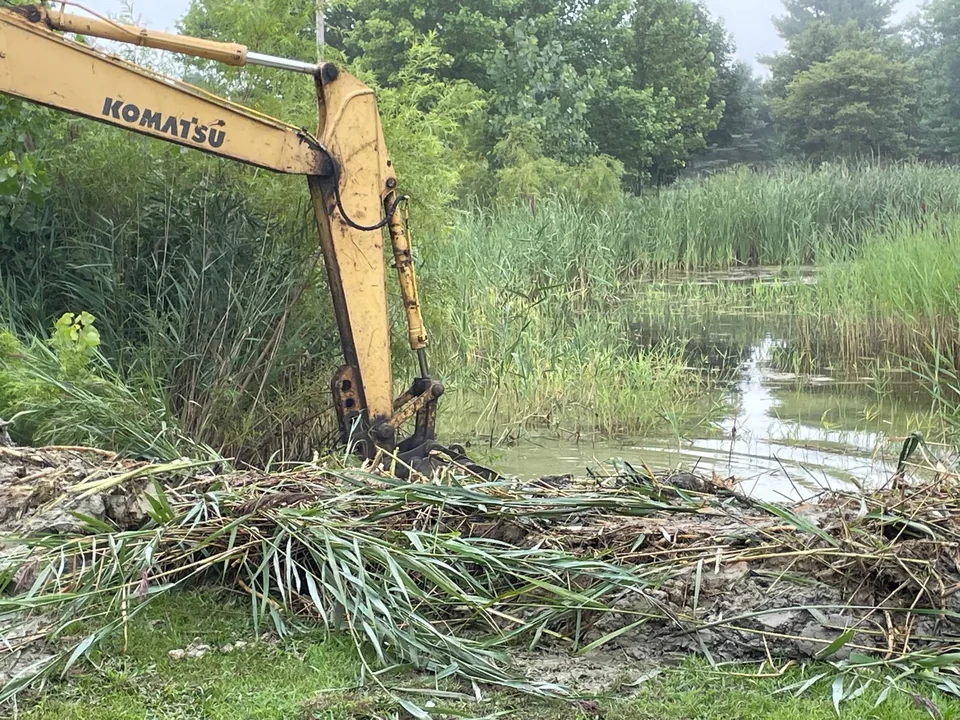
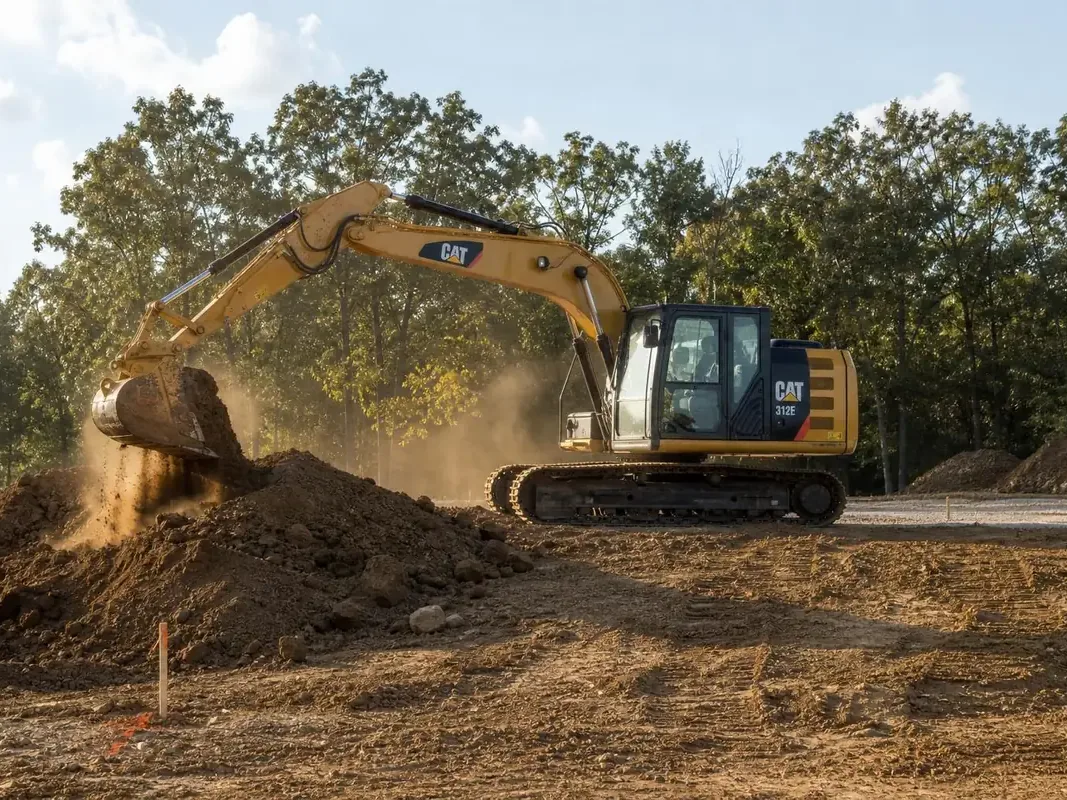
We dig the silt and muck out of old farm and home ponds with an excavator. Then we clear and reshape the overgrown banks and the dam.
Learn More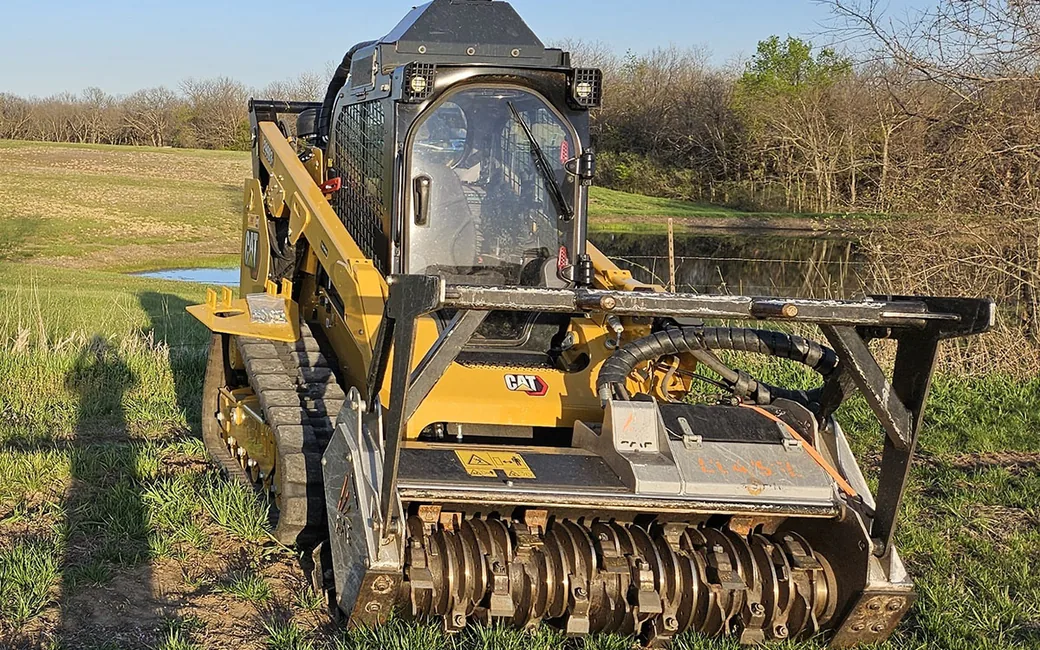
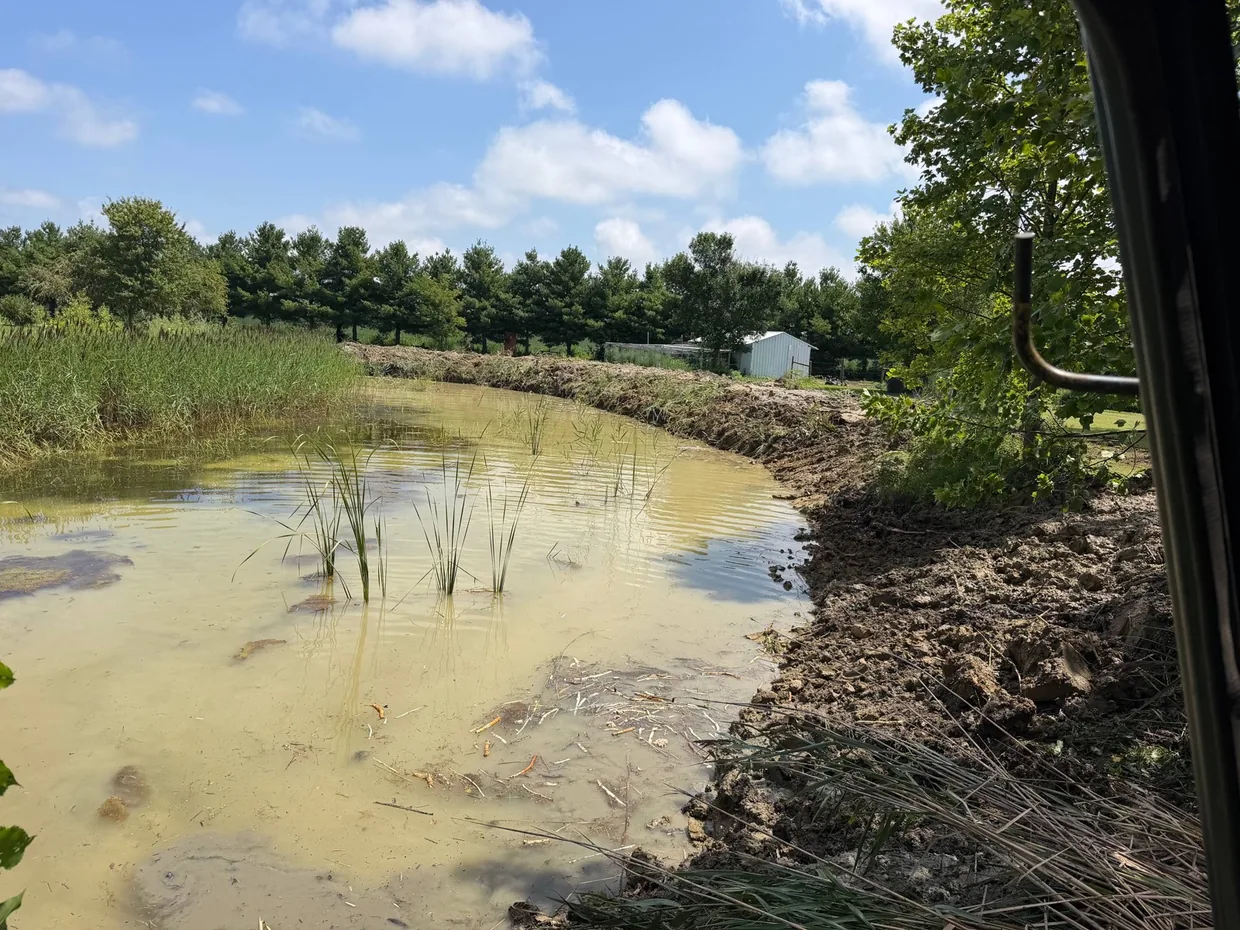
Pond construction means building a new pond where there was none. Nickell's Land Management builds farm and home ponds around Parker, Kansas, and across eastern Kansas. We dig the basin and build the dam with an excavator and a skid loader. Then we shape the banks and the spillway, so storm water has a way around the dam.
We build for farms that need stock water and for homeowners who want a pond near the house. Trees and brush come off the site first. Our main trade is land clearing in Parker and across eastern Kansas. For a new house or shop on the land, site preparation gets the pad ready for your builder.
Tell us what the land needs and where it is. We look at the job and put the quote in writing.
The Natural Resources Conservation Service (NRCS) publishes a federal pond handbook. It favors a site where a dam can cross a narrow valley. Steep valley sides and a floor that floods a wide area store the most water for the least fill. That layout also keeps shallow water small, which cuts evaporation and weed growth.
The land that drains into the pond matters too. It has to be large enough to keep water in the pond through a drought. Too large a drainage, though, calls for a costly spillway to pass big storms. The handbook rates land in grass or trees as the most desirable drainage, since it sends in less silt.
Look below the dam as well. The handbook warns against a site where a failed dam could hurt people or damage homes or roads. Kansas law also requires notice to Kansas 811 at least two full working days before digging. Utilities mark only their own lines, so tell us where a line runs to a barn or a well.
A pond holds water only if the soil under it does. The handbook rates clays and silty clays as excellent for this. Sand and gravel usually leak too much. It calls for test holes across the pond area, and three or four per acre may do on even soil.
Much of eastern Kansas south of the Kansas River sits in the Osage Cuestas, the Kansas Geological Survey says. Limestone and shale make up most of the rock near the surface there. The handbook warns that hidden cracks in limestone under the soil can empty a pond. Its best clue on such ground is how well nearby ponds hold water.
A dam starts with the sod and topsoil stripped from under it. Where needed, a core trench down the center line reaches the watertight layer below and gets packed with clay. The handbook has the fill placed in layers about 6 inches thick, each one packed down. The dam is built a little taller than planned, since the fill and the ground under it settle.
Size starts with what the pond is for. The handbook figures beef cattle and horses drink 12 to 15 gallons a head each day. It spaces stock ponds so livestock walk no more than a quarter mile in rough country. On smooth, nearly level ground, the limit is a mile.
For fishing, the handbook says ponds from a quarter acre to several acres can be managed for good fish production. It calls for at least 8 feet of depth over about 1,000 square feet.
Every pond needs extra depth to cover seepage and evaporation. To estimate volume, the handbook multiplies surface acres by the depth at the dam, then by 0.4. By that rule, a 1-acre pond 10 feet deep at the dam holds about 4 acre-feet. An acre-foot is an acre of water one foot deep.
Call or text for a written quote. We work about 60 miles around Parker across eastern Kansas.
(620) 252-9314From the first call or text to the finished work, here is how it goes.
Call or text (620) 252-9314, or send the form. Tell us where the land is and what is growing on it.
We come out to see the growth and the ground. We also check how the machines will get in.
The quote spells out the work and comes to you in writing. Work starts once you approve it.
The skid loader and the excavator go to work. Brush gets mulched in place, or trees come out and get piled on site.
The cleared ground is ready for what comes next. That may be pasture again or a house site for your builder.
Common questions about pond construction around Parker and the rest of eastern Kansas. If yours is not here, call or text and ask.
We dig the silt and muck out of old farm and home ponds with an excavator. Then we clear and reshape the overgrown banks and the dam.
Learn More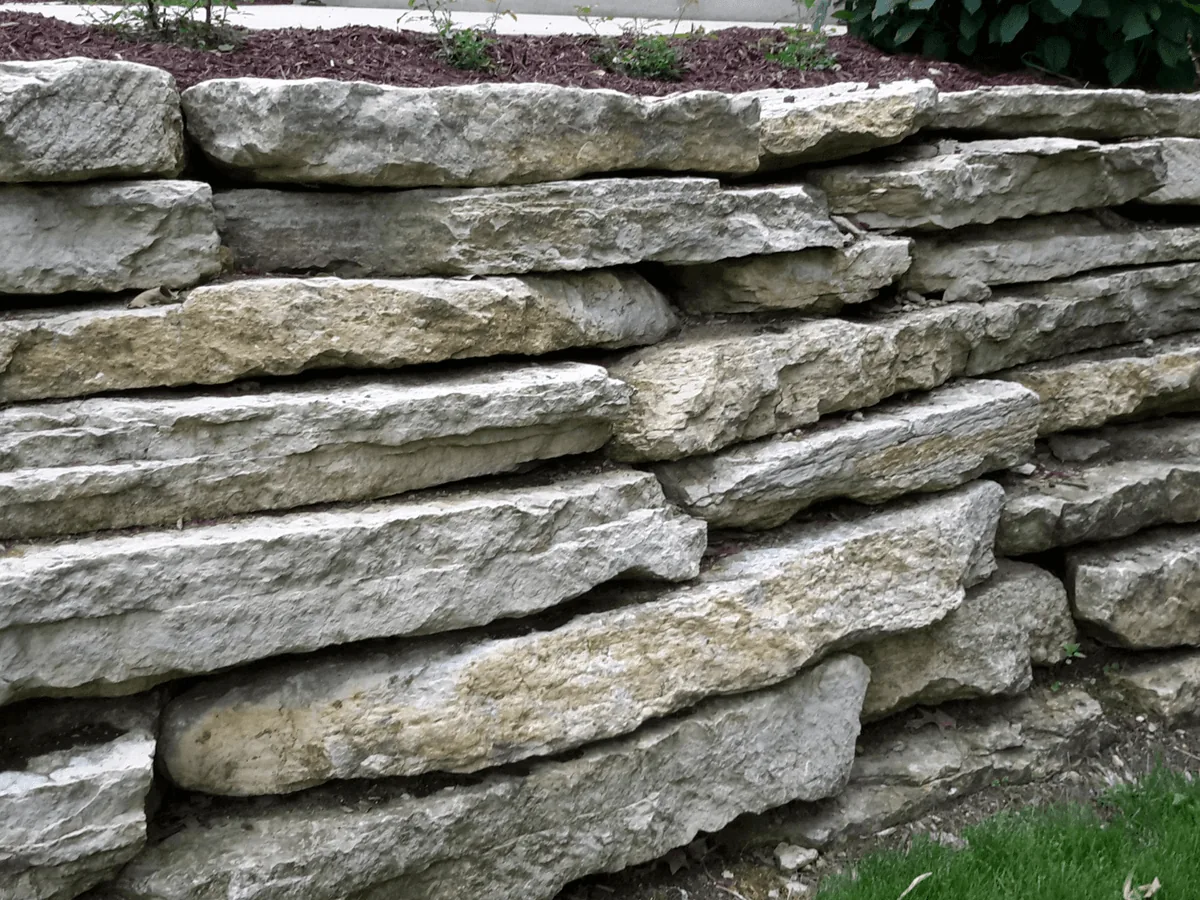
We build retaining walls where a bank or a grade change needs holding. The base under the wall and the drainage behind it are part of the job.
Learn More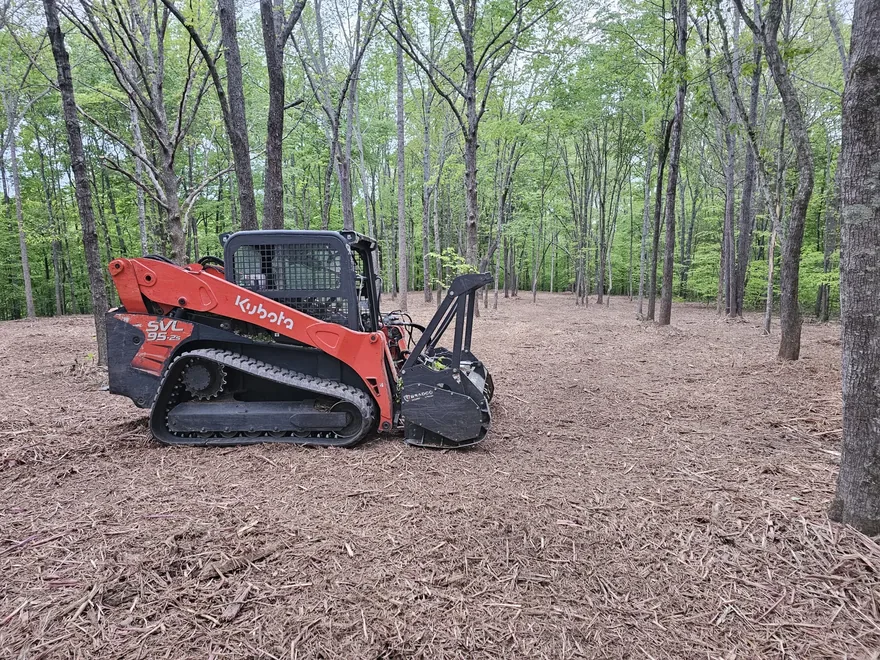
A forestry mulching head on our skid loader grinds brush and small trees where they stand. The mulch stays on the ground and covers the soil.
Learn MoreA forestry mulching head on the skid loader grinds brush and small trees in place. The excavator pulls stumps and roots and digs pond basins.
We look at the job before we price it. The quote comes to you in writing, with the work spelled out.
Our base is in Linn County, and we take jobs within about 60 miles. That reaches Fort Scott and Iola to the south and Olathe to the north.
We work for homeowners and landowners with acreage, including farms with pasture to open up. Builders and businesses that need a site cleared and prepared can call or text too.
Send the form with the town and a few words about the land. You can also call or text (620) 252-9314.
Tell us what the land needs and where it is. We look at the job and put the quote in writing.