Lot Clearing
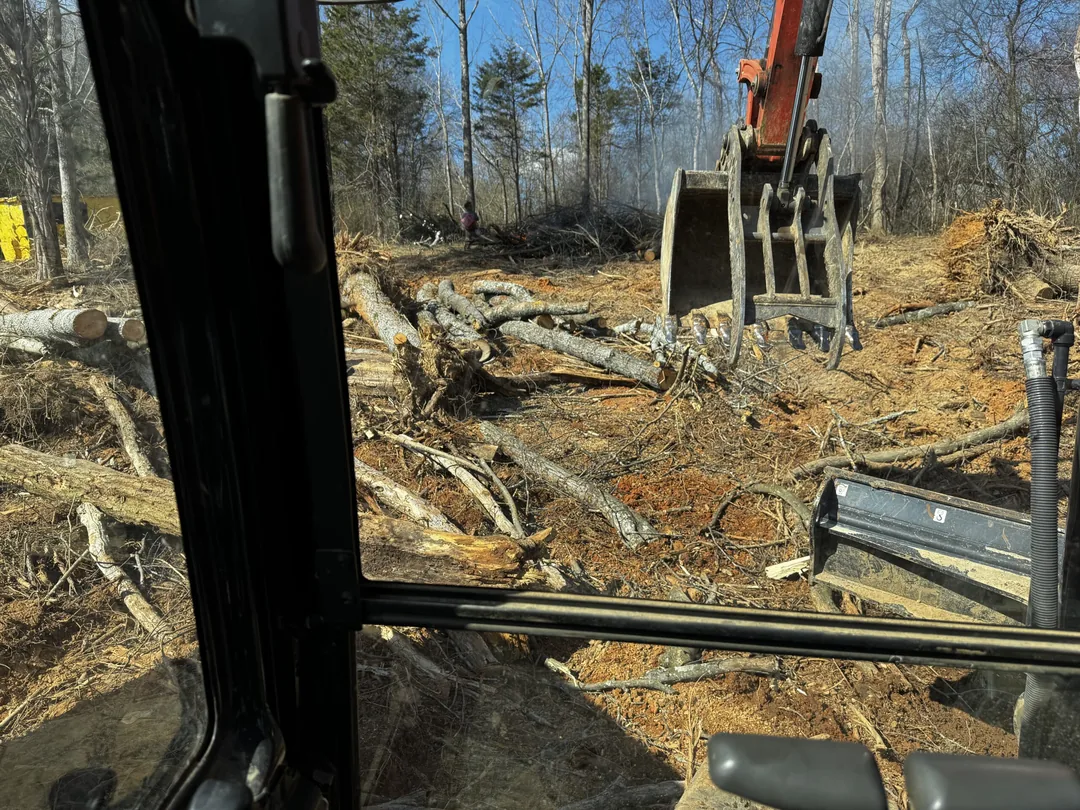
We clear building lots and parcels around Parker, Kansas, with an excavator and a skid loader. The stumps get pulled, roots and all.
Learn More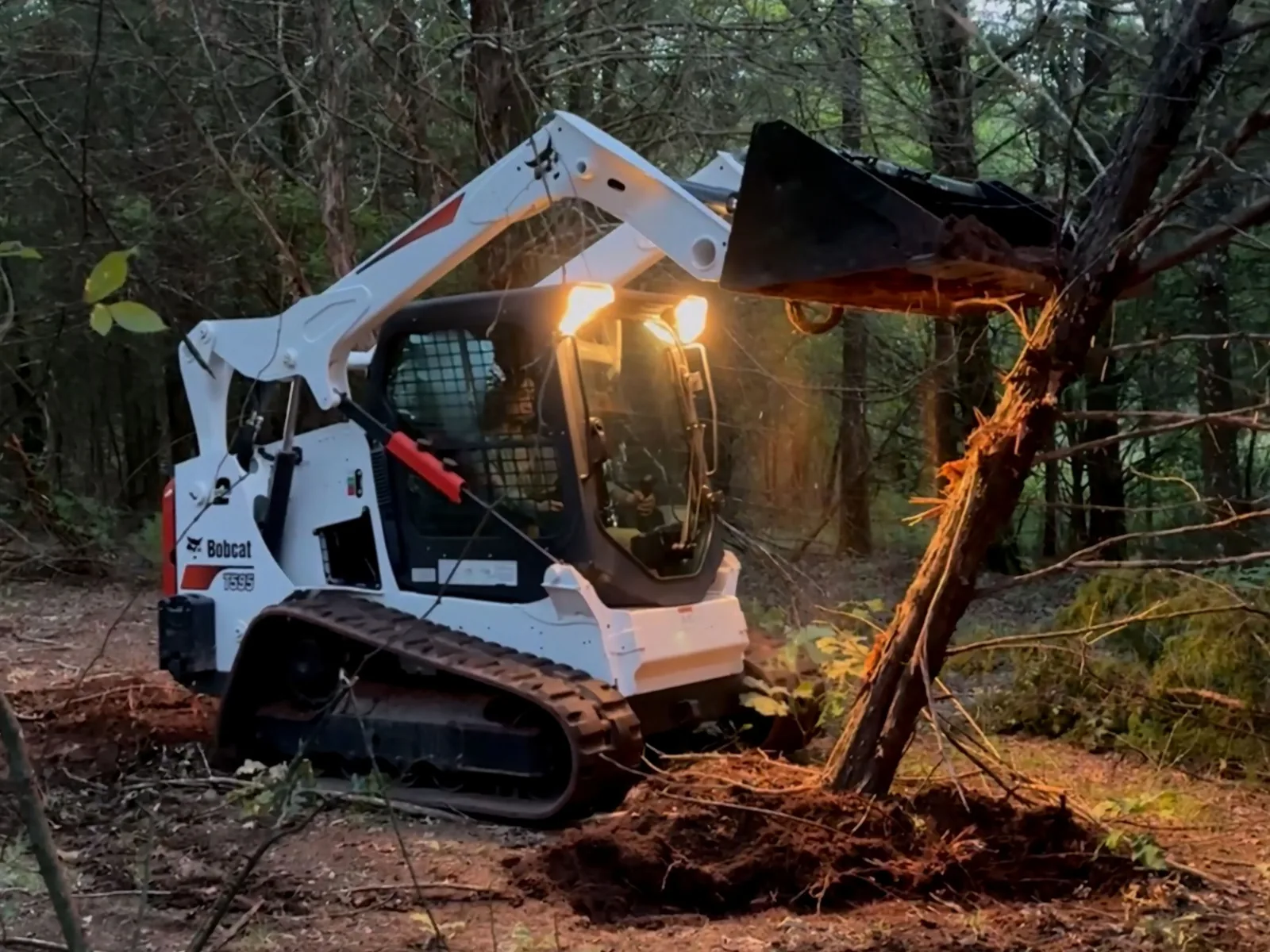
Brush clearing opens up ground that brush and young trees have taken over. In eastern Kansas, that can mean pasture gone to buckbrush, sumac, hedge and young cedars. It can also be a briar thicket in a fence corner or brush creeping into a yard. The ground stays pasture or yard, open and ready to use again.
Nickell's Land Management clears brush with a skid loader and an excavator. The work is one part of our land clearing around Parker, Kansas. We take brush clearing jobs within about 60 miles of Parker. That reaches from Linn County up to the south side of the Kansas City metro.
Tell us what the land needs and where it is. We look at the job and put the quote in writing.
Pasture is a big part of Linn County farmland. The 2022 Census of Agriculture counted more than 100,000 acres of it. K-State Research and Extension notes that woody plants once stayed along creeks and streams. Without fire, they spread into the prairie and can take it over.
Dense brush blocks grazing and makes livestock harder to handle, K-State's brush guide says. The same guide notes that removing trees and brush from grazing land can raise forage production. It can also raise how many animals the land can carry.
The guide also says brush is often ignored until the problem gets severe. Its advice is to catch brush problems before then. Brush clearing takes in fence corners and field edges along with the open ground. When a whole fence row or tree line needs to come out, that is fence line clearing.
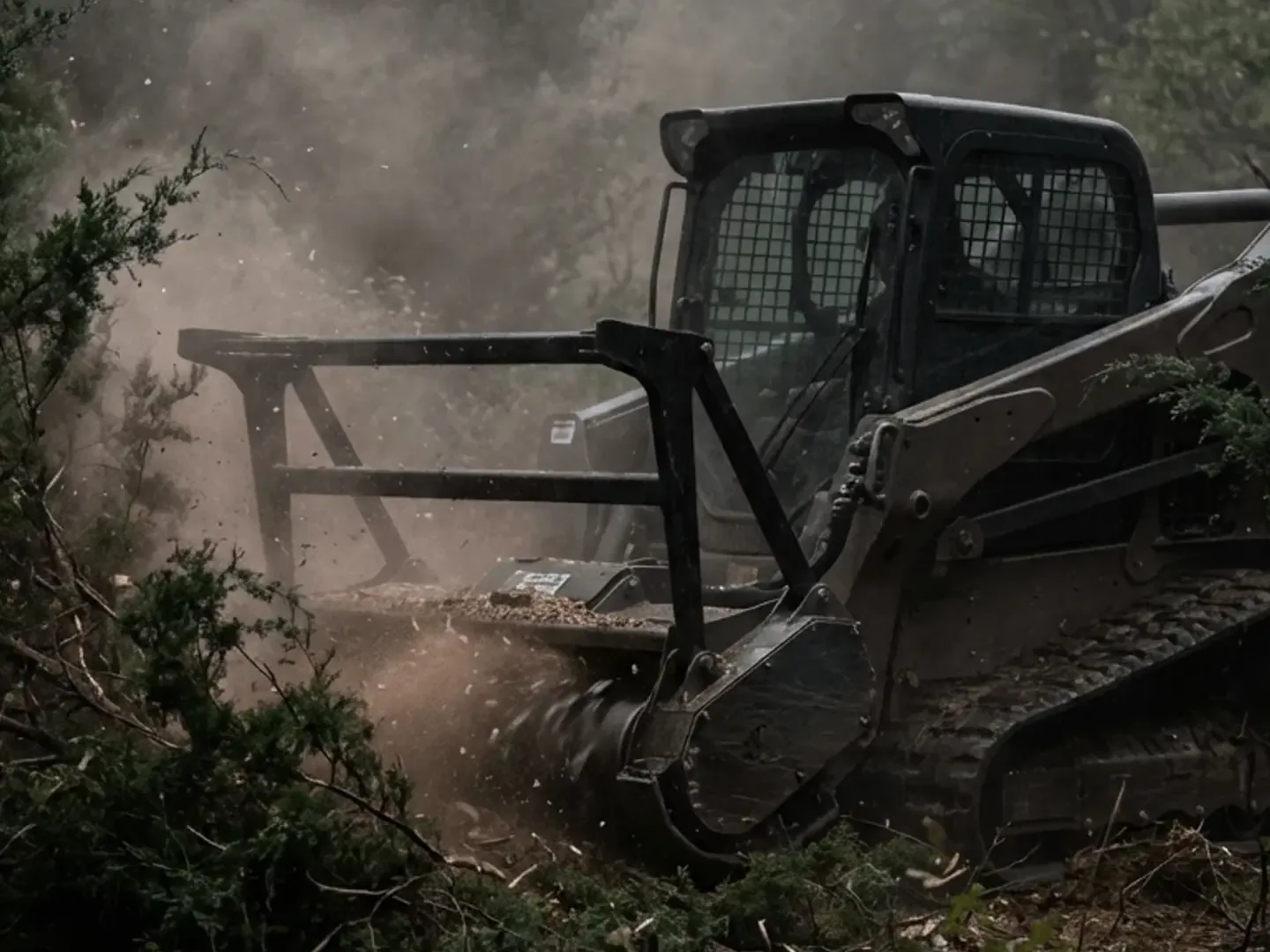
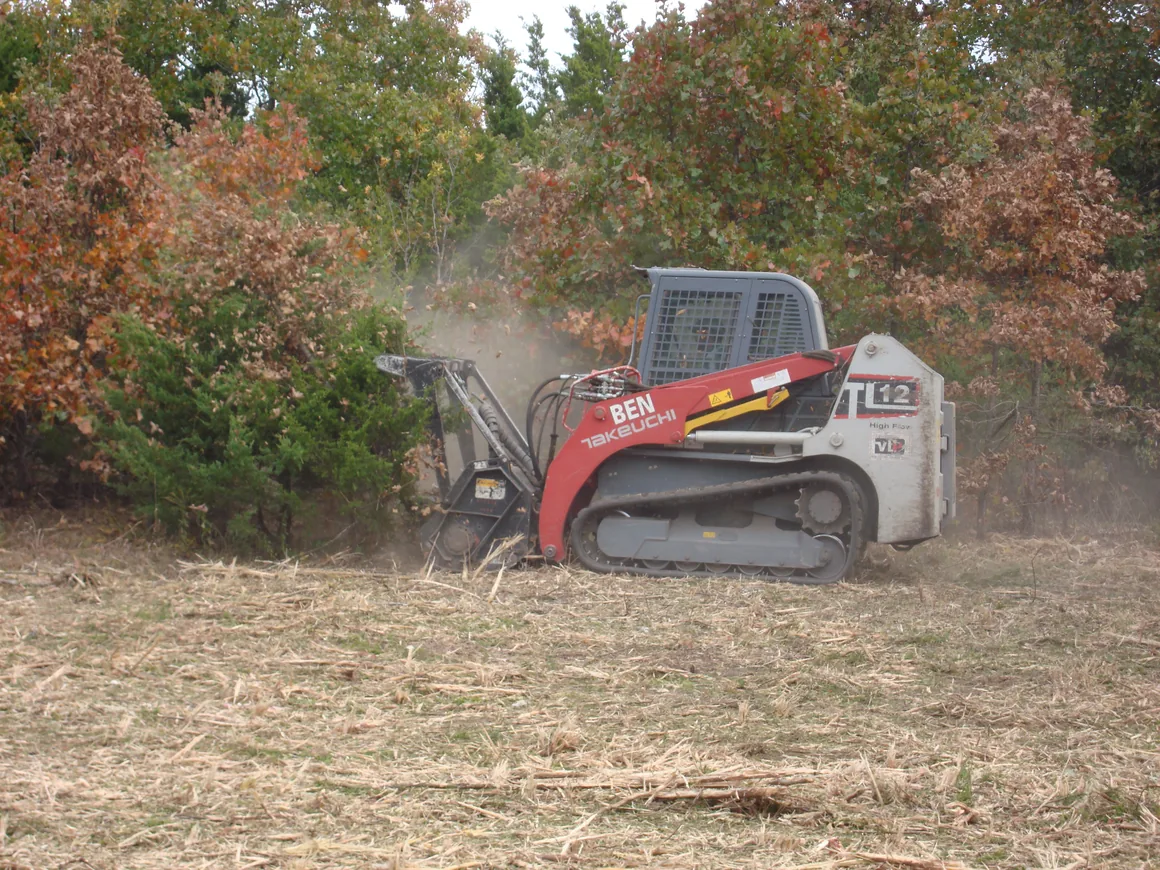
Brush and small trees go through the forestry mulching head on the skid loader. The head grinds them where they stand, and the mulch stays on the ground.
Bigger stems and thick clumps come out with the excavator, roots and all. We pile the pulled brush on site where you want it. You pick the trees that stay, and we clear around them.
Pulling roots moves soil below the surface, and Kansas law counts that as excavation. The law calls for notice through Kansas 811 at least two full working days before digging starts. Utilities mark only their own lines, so tell us where any private line runs to a barn or a shop.
Some of it will, and the kind of brush decides. Hedge and honey locust sprout again from parts below the ground, K-State notes. Eastern red cedar does not, so a cedar cut off at ground level will not regrow.
When the excavator lifts a stem out, roots and all, there is no stump left to sprout. Roots left in the soil can still send up shoots, K-State's brush guide notes. Plan on some follow-up for the kinds that sprout.
Grazing helps keep the brush down. K-State's brush guide says livestock keep woody seedlings and sprouts stunted in moderately or heavily stocked pastures. Cattle seldom eat mature woody plants, but goats and deer eat a lot of woody shoots and leaves. Once the brush is down, good grazing and pasture care can limit regrowth, the guide says.
Call or text for a written quote. We work about 60 miles around Parker across eastern Kansas.
(620) 252-9314From the first call or text to the finished work, here is how it goes.
Call or text (620) 252-9314, or send the form. Tell us where the land is and what is growing on it.
We come out to see the growth and the ground. We also check how the machines will get in.
The quote spells out the work and comes to you in writing. Work starts once you approve it.
The skid loader and the excavator go to work. Brush gets mulched in place, or trees come out and get piled on site.
The cleared ground is ready for what comes next. That may be pasture again or a house site for your builder.
Common questions about brush clearing around Parker and the rest of eastern Kansas. If yours is not here, call or text and ask.
We clear building lots and parcels around Parker, Kansas, with an excavator and a skid loader. The stumps get pulled, roots and all.
Learn More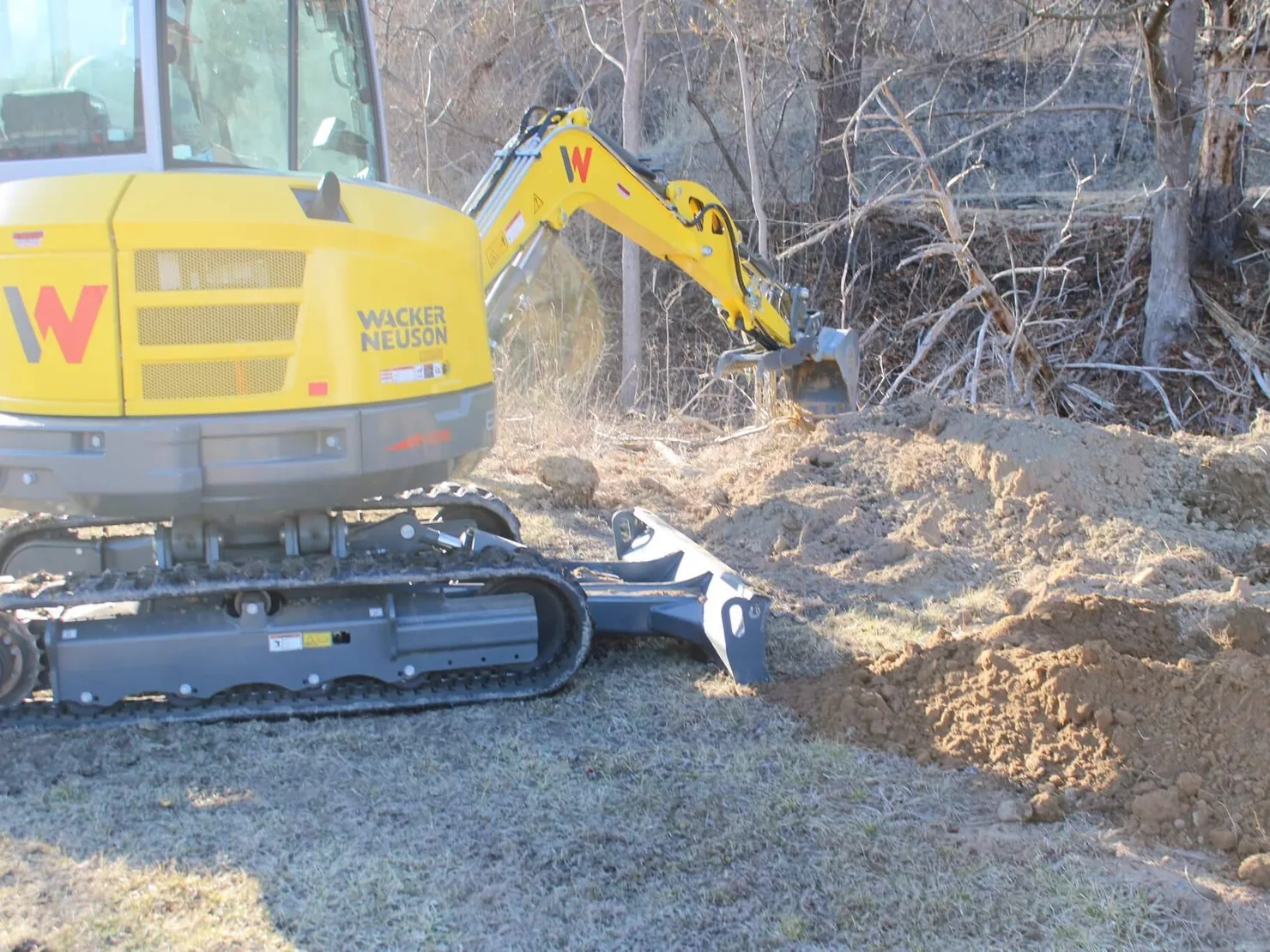
We level and rough grade cleared ground for a new home or a shop. Then we cut in the access so the builder can start.
Learn More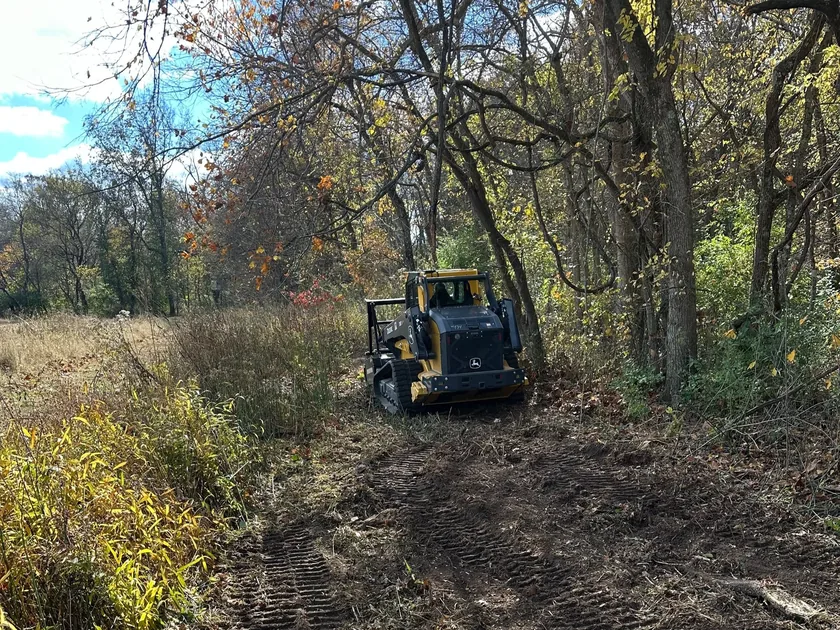
We clear volunteer cedars and hedge out of fence rows and tree lines with an excavator and a skid loader. The line opens back up so a new fence can go in or a field edge can come back.
Learn MoreA forestry mulching head on the skid loader grinds brush and small trees in place. The excavator pulls stumps and roots and digs pond basins.
We look at the job before we price it. The quote comes to you in writing, with the work spelled out.
Our base is in Linn County, and we take jobs within about 60 miles. That reaches Fort Scott and Iola to the south and Olathe to the north.
We work for homeowners and landowners with acreage, including farms with pasture to open up. Builders and businesses that need a site cleared and prepared can call or text too.
Send the form with the town and a few words about the land. You can also call or text (620) 252-9314.
Tell us what the land needs and where it is. We look at the job and put the quote in writing.