
Brush Clearing
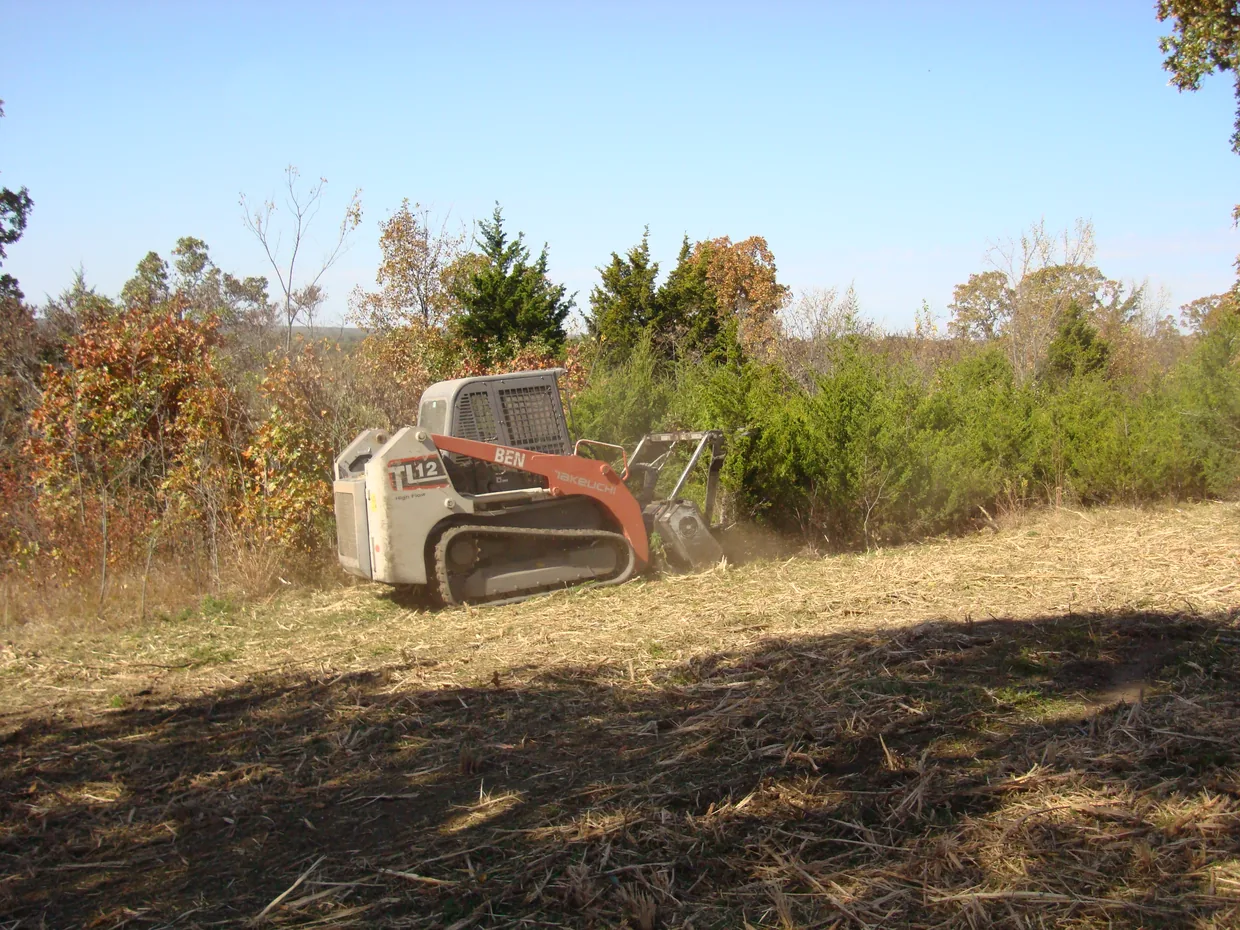
We open up pasture and yards that brush and young trees have taken over. A forestry mulching head grinds the brush, and the excavator pulls bigger stems by the roots.
Learn More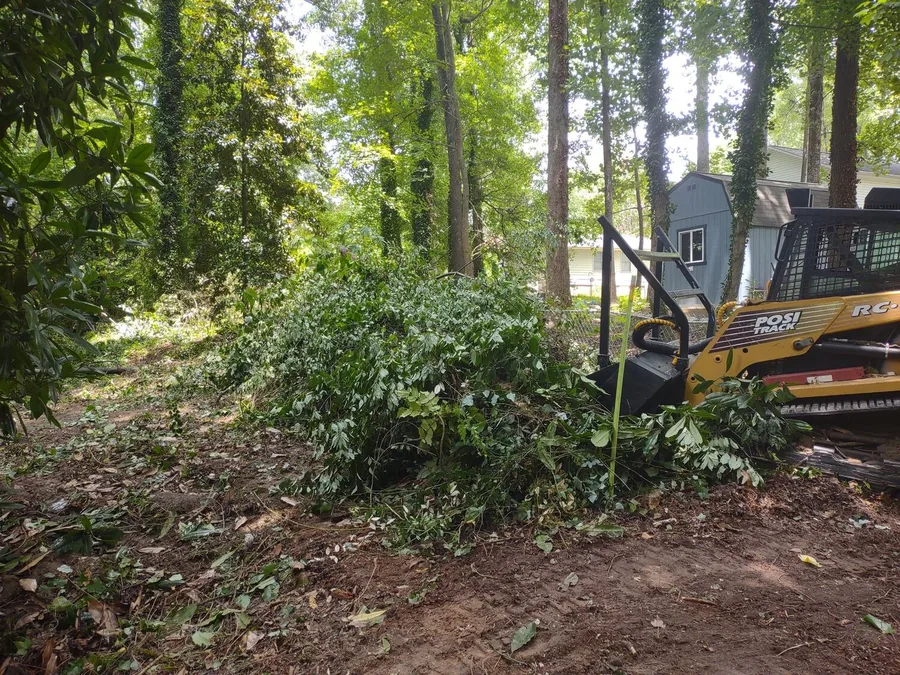
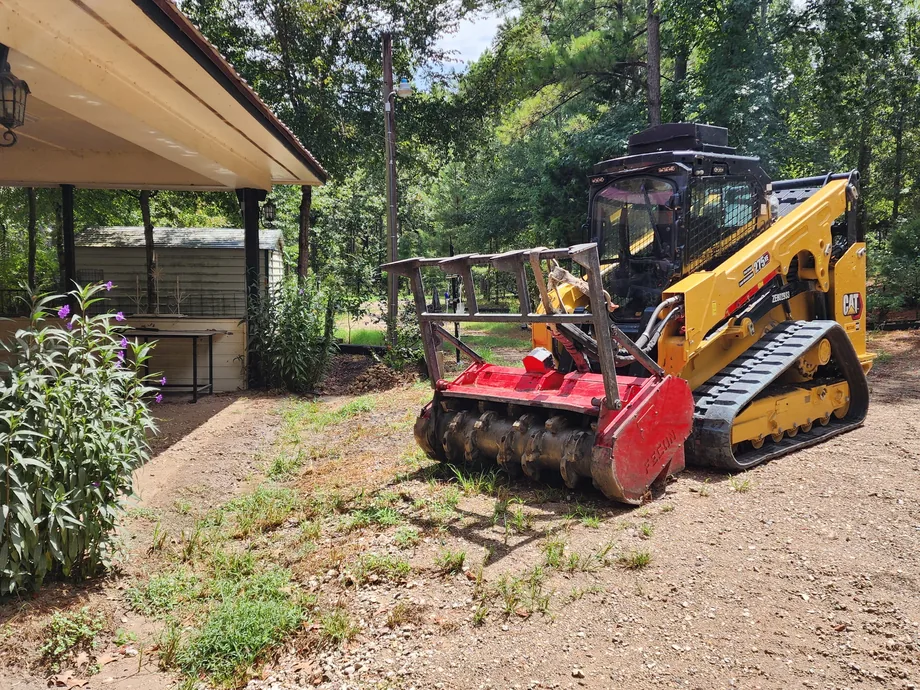
Forestry mulching clears brush and small trees right where they grow. A forestry mulching head on our skid loader cuts each stem low and grinds it up. The mulch stays on the ground and covers the soil. Nickell's Land Management does this work as part of land clearing in Parker and across eastern Kansas.
Mulching suits pasture and acreage that brush and cedars have taken over. The soil stays in place under the mulch, and the grass gets its sunlight back. We work for homeowners with acreage and for farms with pasture to open up. Call or text (620) 252-9314, and we will look at the job and put the quote in writing.
Tell us what the land needs and where it is. We look at the job and put the quote in writing.
Forestry mulching fits land that will stay in grass or stay wooded. That means pasture lost to brush, or acreage you want opened up under the bigger trees. The mulching head takes out what you want gone and works around the trees you keep.
Ground headed for a house pad or a pond needs the roots out. That calls for lot clearing with the excavator, which pulls the stumps, roots and all. A thicket that will stay pasture but needs its roots pulled falls under our brush clearing work.
Tree size matters too. The U.S. Forest Service notes that bigger trees take a bigger cutting head and more power. Trees too big for the mulching head come down with the excavator and get piled on site.
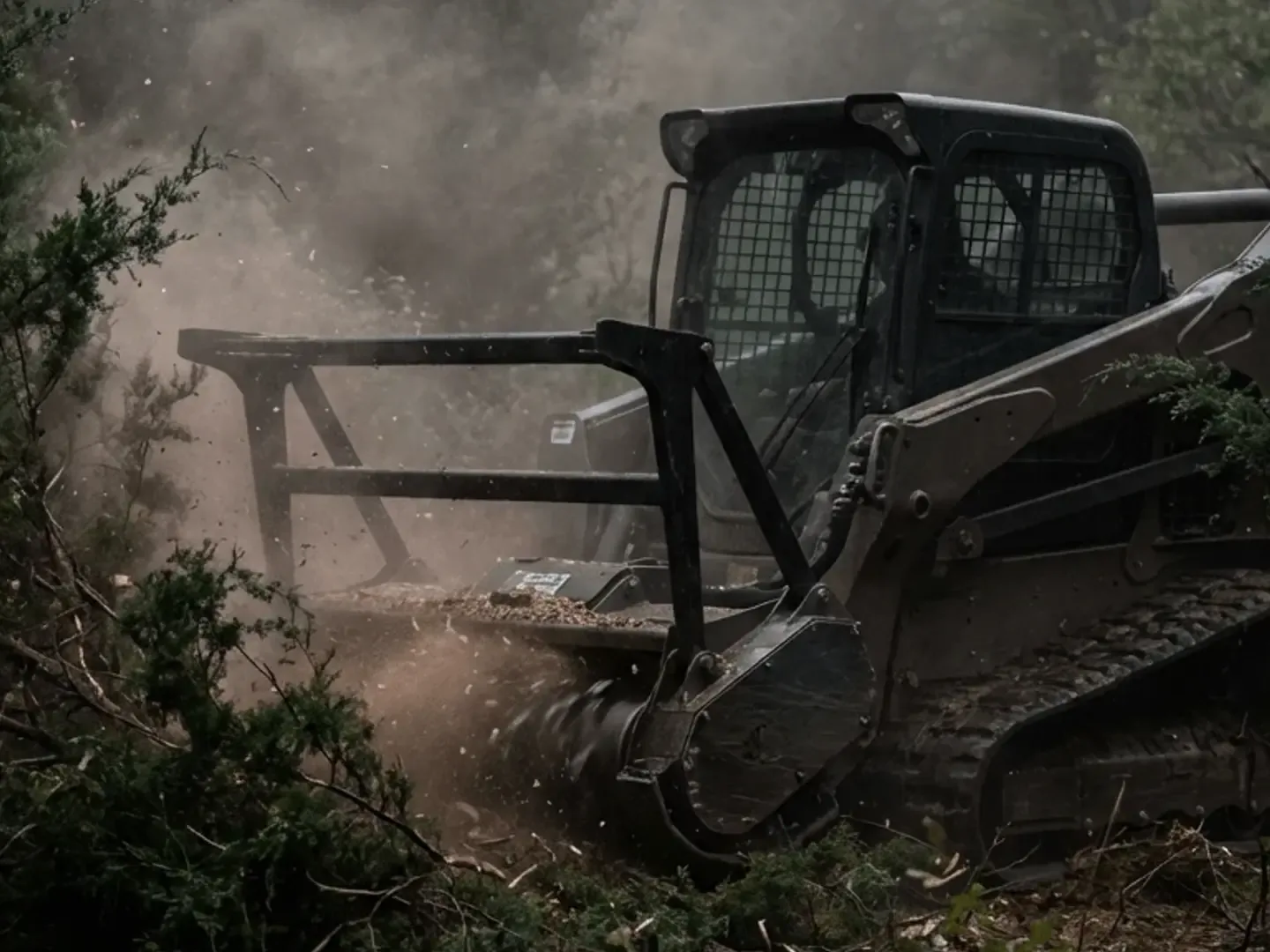
The mulching head cuts each stem and shreds it as the skid loader rolls over it. What is left is a layer of shredded wood on top of the soil. The roots stay in the ground beneath it.
That layer protects the soil. K-State Research and Extension says mulch on the soil surface holds in moisture and cuts erosion from heavy rain. The skid loader drives on its own mulch, and the Forest Service says that keeps erosion and compaction down.
The Forest Service notes that shredded wood breaks down back into the soil over time. It also notes that mulched wood can smolder a long time once lit, so plan pasture burns around it.
Eastern red cedar is the only evergreen tree native to Kansas, and it keeps spreading into pasture. Left alone, cedars and brush shade out the grass and take its water.
K-State Research and Extension says a normal pasture fire controls cedars under three to four feet tall. Past four feet, cutting may be the only way to control them. A forestry mulching head cuts cedars off near the ground and grinds them up.
Cedars also come up along fence rows, where birds perch on the wire. When the whole row has to come out for a new fence, see fence line clearing.
Call or text for a written quote. We work about 60 miles around Parker across eastern Kansas.
(620) 252-9314From the first call or text to the finished work, here is how it goes.
Call or text (620) 252-9314, or send the form. Tell us where the land is and what is growing on it.
We come out to see the growth and the ground. We also check how the machines will get in.
The quote spells out the work and comes to you in writing. Work starts once you approve it.
The skid loader and the excavator go to work. Brush gets mulched in place, or trees come out and get piled on site.
The cleared ground is ready for what comes next. That may be pasture again or a house site for your builder.
Common questions about forestry mulching around Parker and the rest of eastern Kansas. If yours is not here, call or text and ask.
We open up pasture and yards that brush and young trees have taken over. A forestry mulching head grinds the brush, and the excavator pulls bigger stems by the roots.
Learn More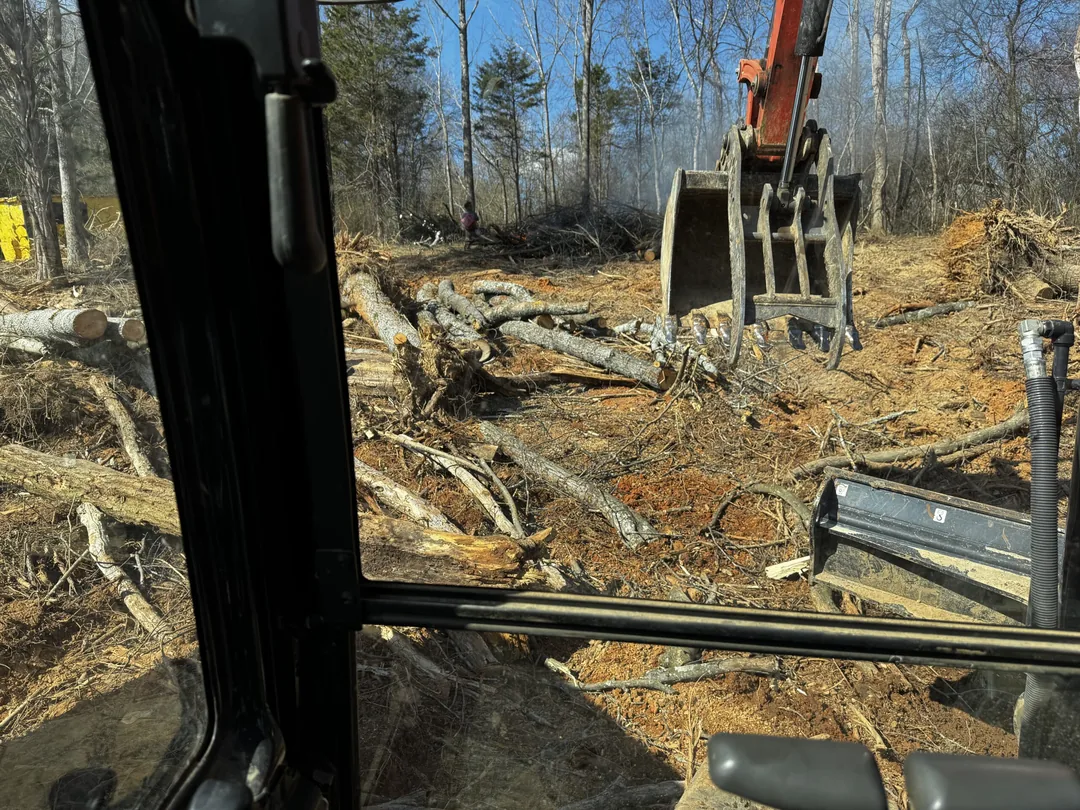
We clear building lots and parcels around Parker, Kansas, with an excavator and a skid loader. The stumps get pulled, roots and all.
Learn More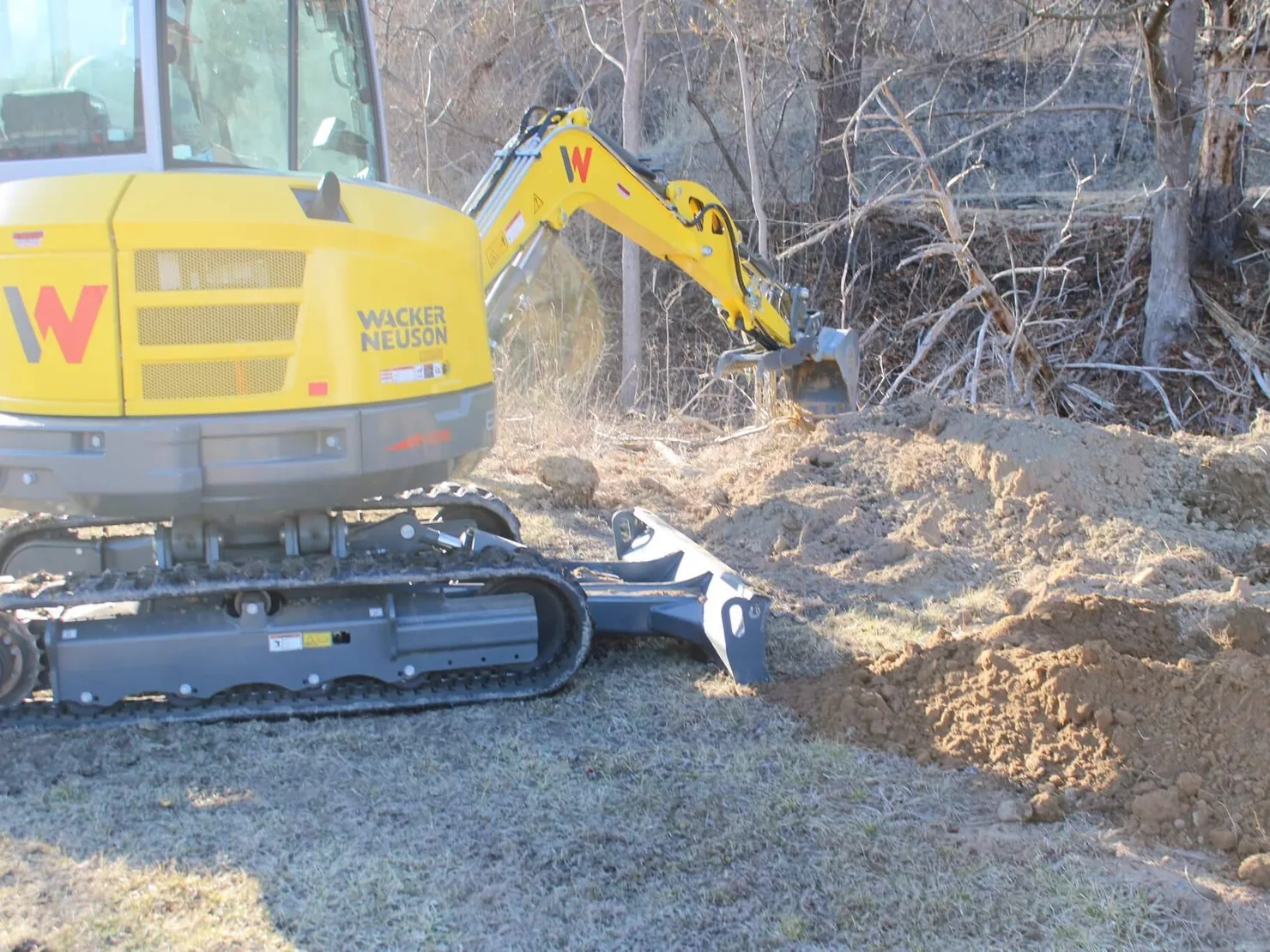
We level and rough grade cleared ground for a new home or a shop. Then we cut in the access so the builder can start.
Learn MoreA forestry mulching head on the skid loader grinds brush and small trees in place. The excavator pulls stumps and roots and digs pond basins.
We look at the job before we price it. The quote comes to you in writing, with the work spelled out.
Our base is in Linn County, and we take jobs within about 60 miles. That reaches Fort Scott and Iola to the south and Olathe to the north.
We work for homeowners and landowners with acreage, including farms with pasture to open up. Builders and businesses that need a site cleared and prepared can call or text too.
Forestry mulching or traditional land clearing in eastern Kansas? Learn when to mulch brush and cedars in place and when stumps and roots must come out.
Read more →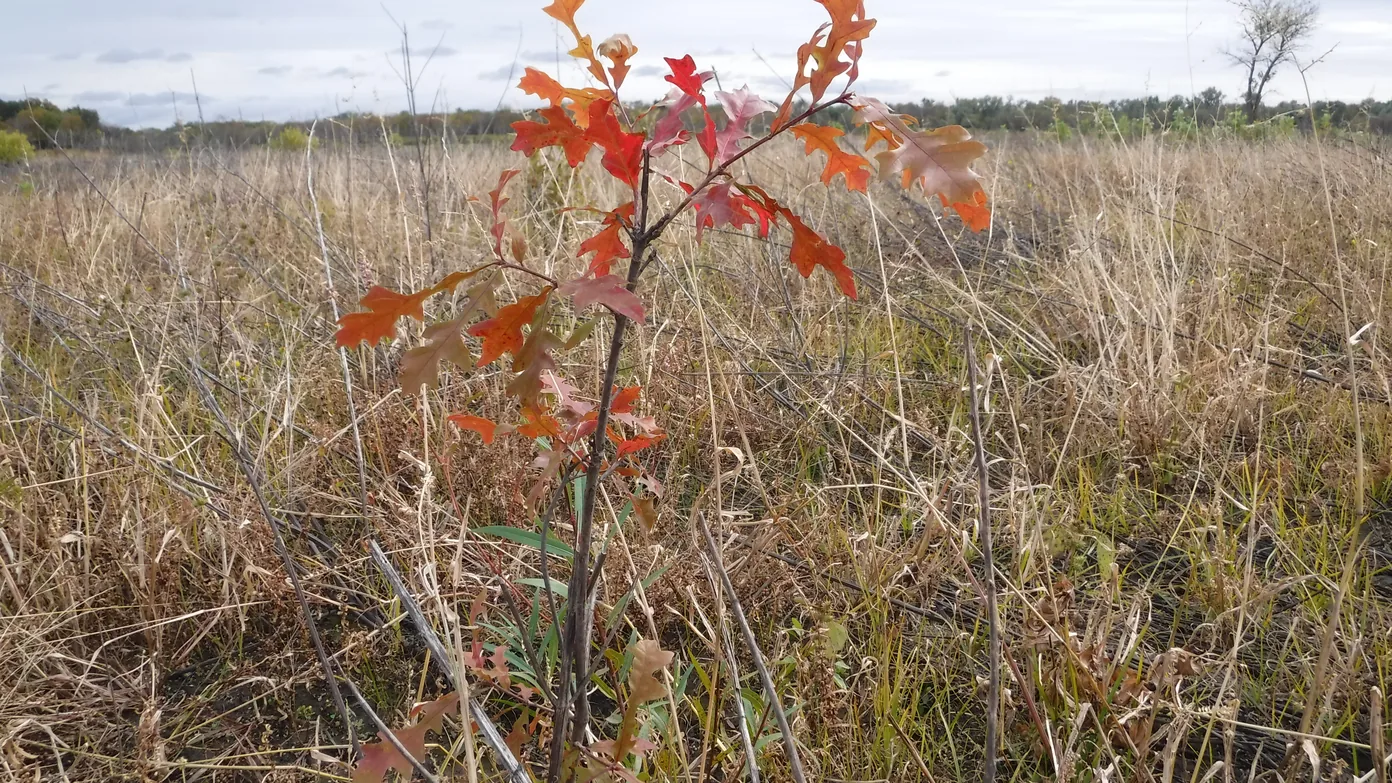
What land clearing costs per acre in Kansas: national and Kansas price ranges, what moves the number, and the state and county rules for burning brush.
Read more →Send the form with the town and a few words about the land. You can also call or text (620) 252-9314.
Tell us what the land needs and where it is. We look at the job and put the quote in writing.